Our Rating: 4.0 / 5 Stars
Table of Contents
Freedom to Roam: No Gates or Lock-ins
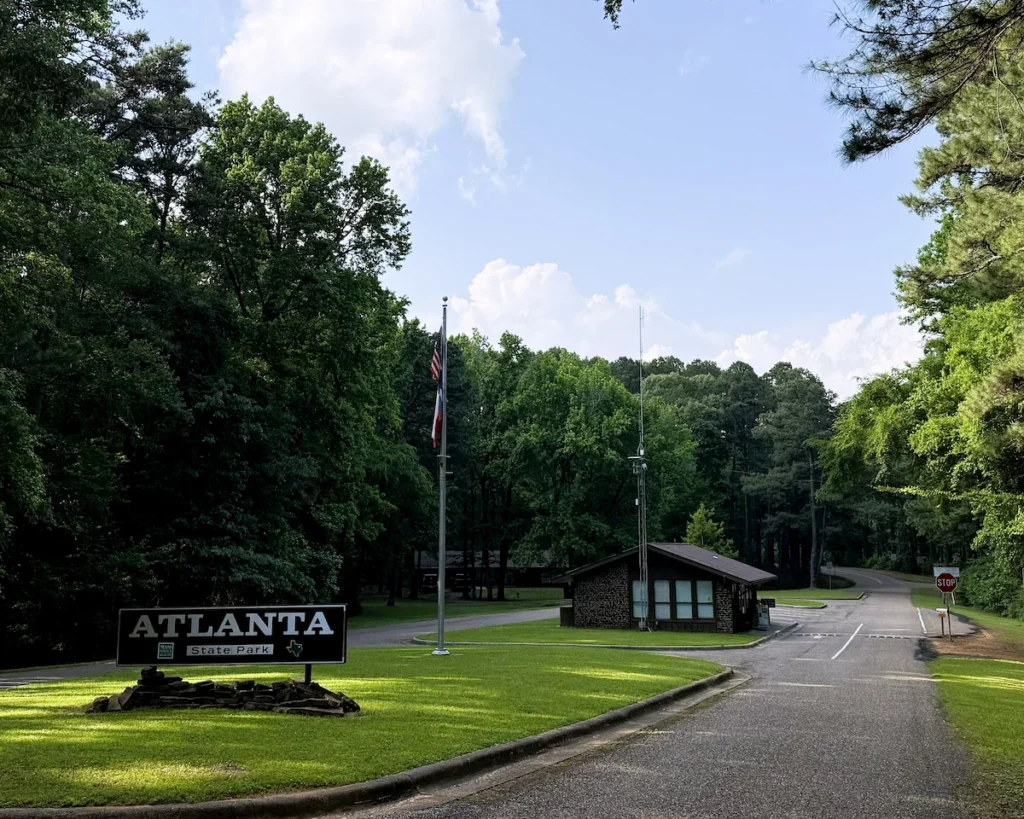
One of the most refreshing perks of this park is the entrance configuration. Unlike many other Texas State Parks that utilize heavy iron gates and strict 10:00 PM lock-down times, Atlanta State Park has no gates. This provides a wonderful sense of freedom, allowing campers to come and go as they please at any hour. Whether you’re heading out for some late-night stargazing at a nearby clearing or arriving late after a long day on the road, you won’t have to stress about gate codes or being locked out of your own campsite.
Pro Tip: Stock Up Before You Arrive
One of the first things you’ll notice about Atlanta State Park is its beautiful seclusion, but that seclusion comes with a price if you’re forgetful. This park is tucked far enough away from civilization that the isolation is physical. Don’t plan on a quick five-minute run to the corner store once you’ve unhooked and leveled. The trek back to the nearest town for a gallon of milk or forgotten leveling blocks is a 20+ minute commitment each way. We highly recommend doing a final inventory check and fully stocking your pantry and fridge before you pass through the park gates so you can stay in relaxation mode.
The Sound of Silence
The trade-off for being in the middle of nowhere is the incredible acoustic profile of the park. Because you are so far removed from major highways and industrial hubs, the silence here is deep and restorative. There are no distant hums of interstate traffic and no midnight train horns cutting through the air. Instead, the primary soundtrack is the wind rushing through the high pine boughs and the occasional call of local wildlife. It is the kind of quiet that allows you to actually hear your own thoughts, a rare find in modern camping.
Exceptional Signage: Easy to Find Your Way
One thing Atlanta State Park gets absolutely right is navigation. From the moment you enter, you’ll notice that everything is remarkably well-marked. Whether you are looking for a specific camping loop, a picnic area, or the park headquarters, the road signs are clear and easy to spot. This level of detail extends to the hiking and biking trails as well; the trails are meticulously marked, making it nearly impossible to lose your way while exploring the woods. It’s a small detail that makes a huge difference in the overall stress-free vibe of the park.

Big Rig Tips: Head to Knights Bluff
If you are traveling in a large fifth wheel, a triple-axle trailer, or a Class A motorhome, do yourself a favor and look at the Knights Bluff camping area first. While Wilkins Creek is charming, the Knights Bluff camping area is generally much more forgiving for longer wheelbases. Most importantly, Knights Bluff offers full hookups (water, electric, and sewer). Having a sewer connection at your site completely negates the need to navigate the tight Wilkins Creek dump station on your way out. A massive win for peace of mind.
Important: Check Lake Conditions First
Wright Patman Lake is the centerpiece of the park, but it is a managed body of water. Before you hit that reserve button, we strongly suggest calling the park HQ to check the current lake status. During our stay, the lake was down significantly for maintenance, which resulted in both boat ramps inside the park being closed. If you were planning on a weekend of fishing or jet-skiing, you might find yourself disappointed, so always verify water levels and ramp accessibility before you hook up.
Connectivity: Starlink vs. Cellular
For the digital nomads and those who need to stay connected, the Piney Woods offer a bit of a technical hurdle.
Our dedicated LTE router really struggled to maintain a solid data connection through the trees. Interestingly, our standard smartphones worked fine for voice calls and basic texting, but don’t count on high-speed streaming.
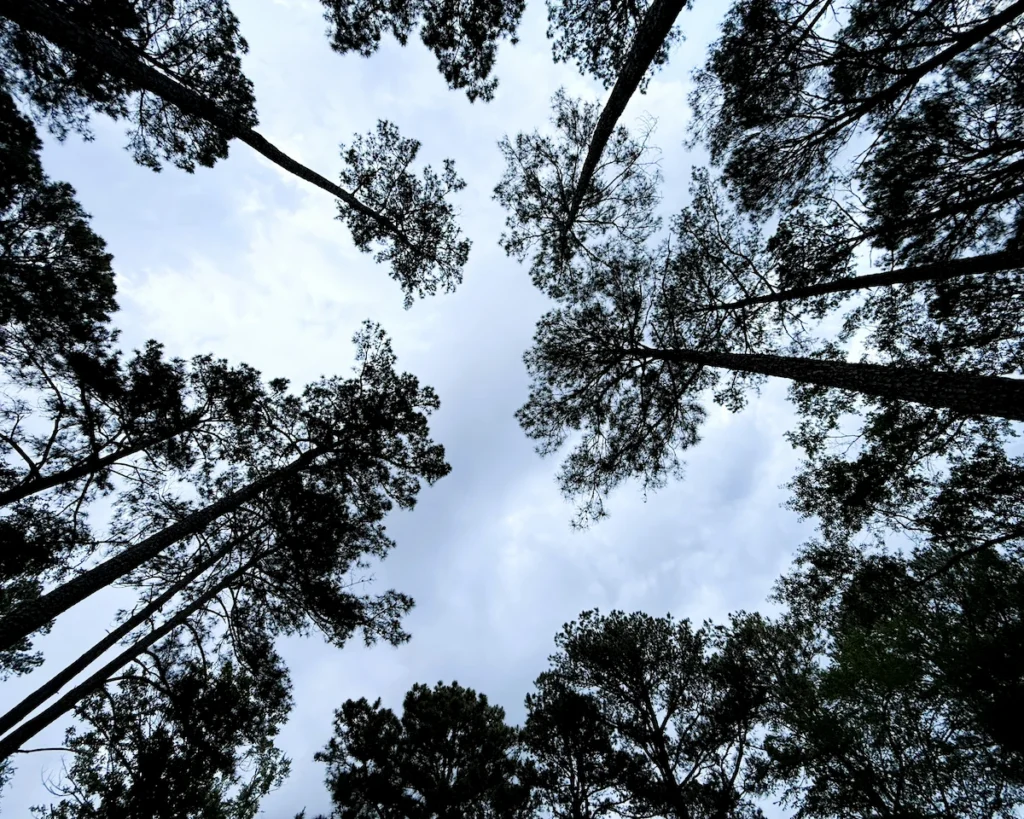
Because of the dense, towering canopy that provides such great shade, getting a clear North-facing view for a Starlink dish is a challenge. We managed to find a small pocket of sky, but you should expect significant obstructions and intermittent service. We found it suitable for streaming services since they are buffered and aren’t bothered by the occasional disconnect. Gaming or live video calls might suffer though.
The Wilkins Creek Layout: Even vs. Odd
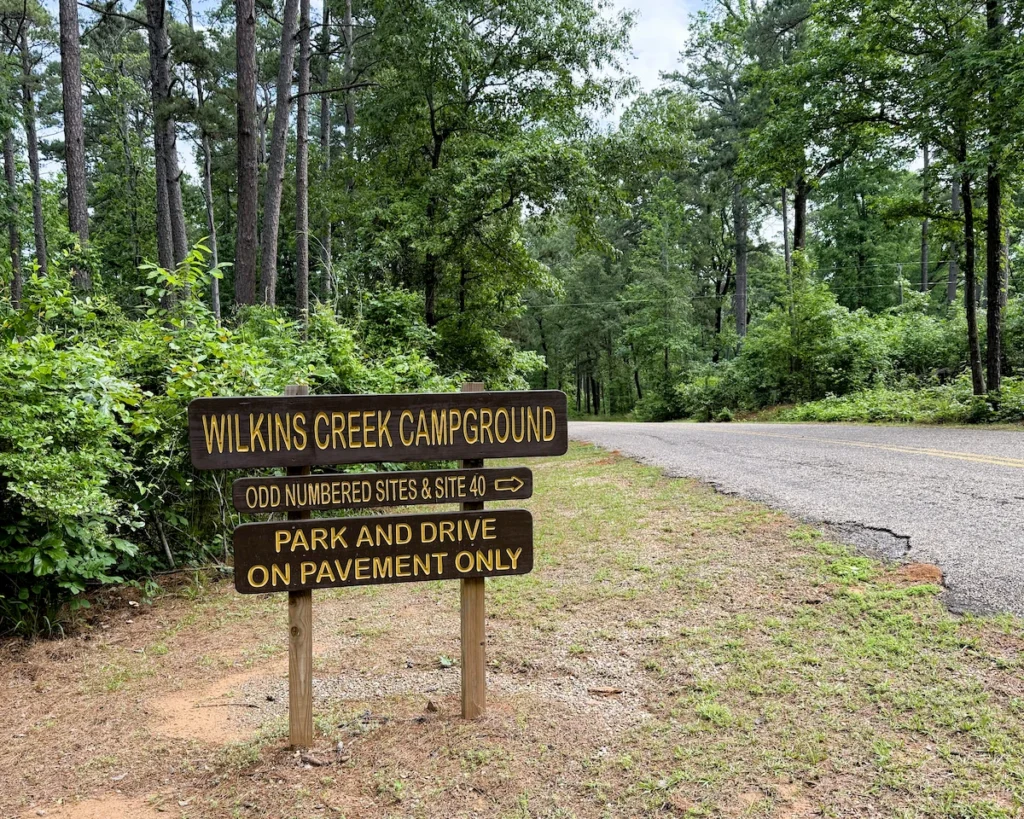
The root of the Wilkins Creek Confusion lies in its two separate entrances. It is important to note that unlike some other areas of the park, Wilkins Creek does not have views of the lake. Instead, you are tucked deep into the dense forest, which offers incredible shade but keeps the water out of sight from your campsite.
The first turn-off you encounter is intended for even-numbered sites. However, there is a total logic-breaker here: Site 41 is an odd number, yet it is listed on the Even sign and accessed via this first entrance.
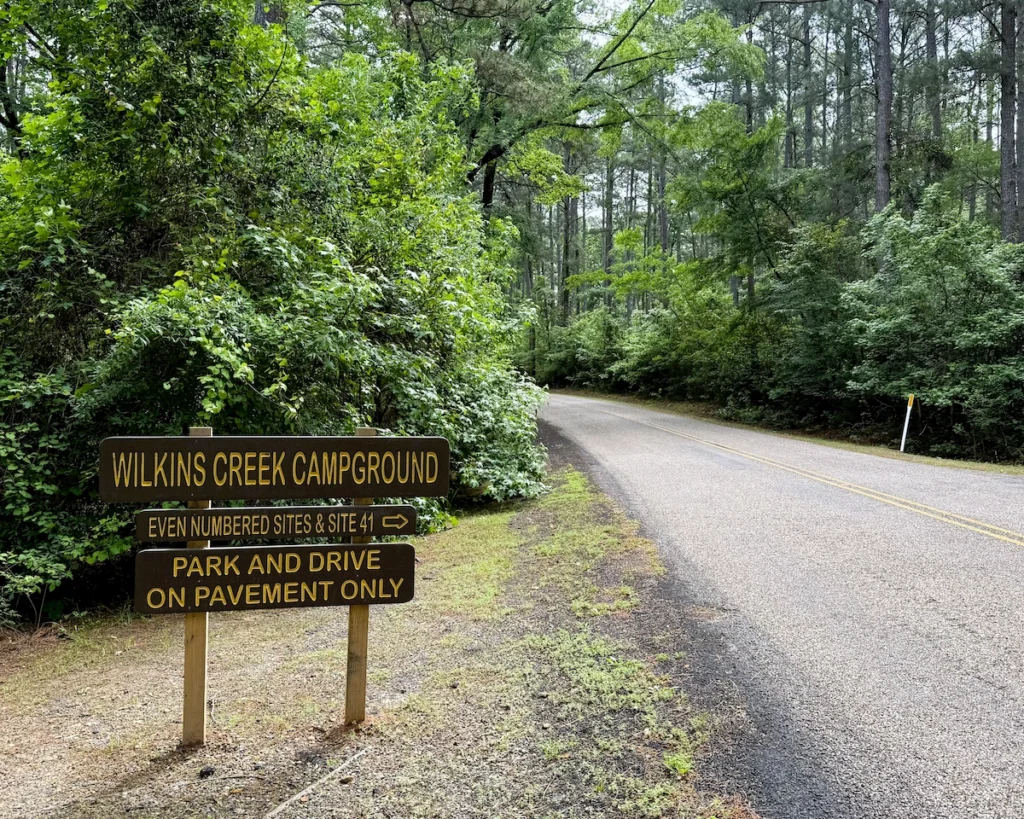
Continue driving a bit further down the main park road to find the second entrance for the remaining odd-numbered sites. The Site 40 Exception: In a mirror-image of the Site 41 weirdness, Site 40 is an even number that is physically oriented to be accessed from this Odd entrance.
The Tight Fit: Maneuvering the Loop
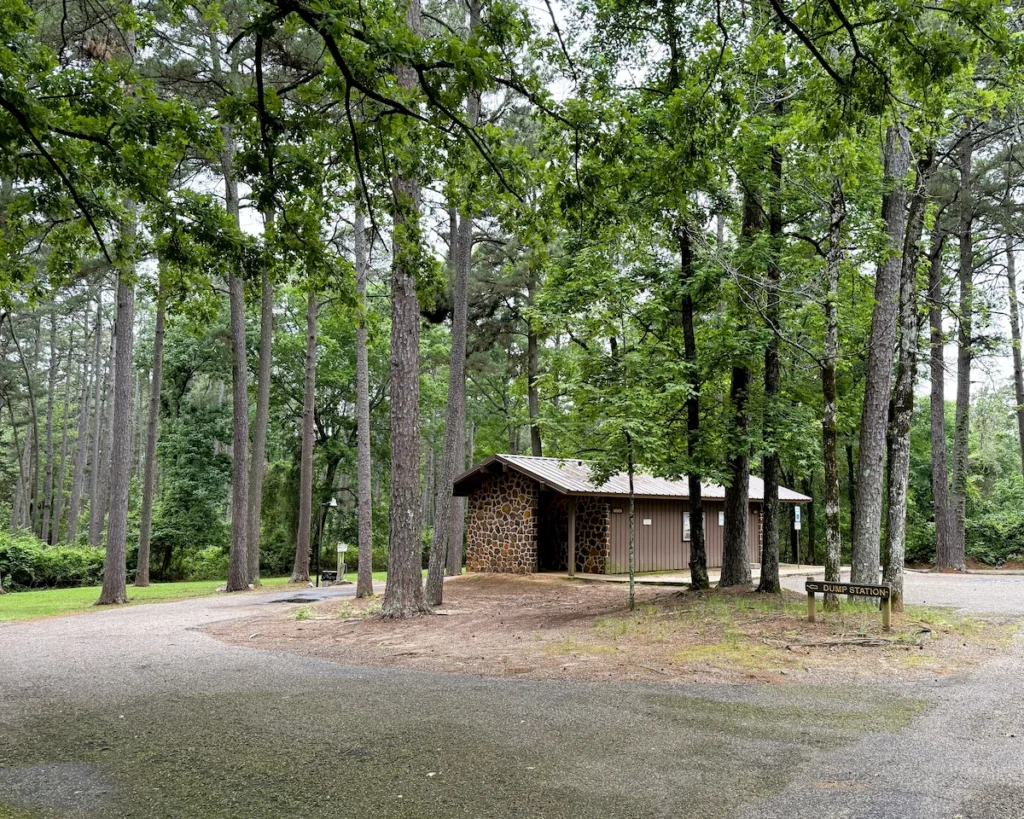
The geometry of the odd-numbered sites is a bit of a trap for larger rigs. If you are in an odd-numbered site, you are facing away from the park exit where the dump station is located.
Because we have a smaller, nimble rig (the Flagstaff E-Pro 15TB), we were able to swing around and get pointed back toward the exit without much fuss. However, if you have a larger setup, the narrowness of the loop road means you simply won’t have the clearance for a U-turn. In that case, you will have to exit the loop entirely, circle back around to the Odd Entrance, and enter the dump station from that side.
Site Quality: Bring Your Leveling Blocks!
Beyond the narrow roads, the sites themselves can be a bit of a challenge to get level. Despite appearing relatively flat at first glance, our site was 2.5 inches unlevel to the driver’s side. If you aren’t carrying a good set of leveling blocks or a reliable leveling system, you might find your fridge struggling or your sleep quality suffering. Make sure to check your levels before you unhook!
The Local Squatters: And a Helpful Hack
The wildlife at Atlanta State Park is bold and busy! We hadn’t been set up for more than an hour before a pair of local birds decided our 4Runner wheel well was prime real estate and began building a nest at record speed. When we asked our park host about the bird situation, he was incredibly helpful and gave us a piece of cardboard to block the wheel well. It was a simple, generous camp hack that kept our wheel well bird-free!
The Final Verdict: Is Atlanta State Park Worth It?
Despite the narrow roads and the odd logistical puzzles of the Wilkins Creek loop, Atlanta State Park remains one of our favorite stops for true relaxation. It is increasingly rare to find a park that offers this level of genuine silence and deep-woods immersion without the constant intrusion of highway hums or train horns. While we’d recommend that big-rig owners stick to the Knights Bluff loop for a stress-free experience, those with smaller setups or a bit of patience will find the beauty of Wright Patman Lake well worth the extra maneuvering. Just remember to pack your groceries, grab a piece of cardboard for the birds, and prepare to trade your cell signal for the sound of the wind through the pines.
Quick Reference: Pros and Cons
| Pros | Cons |
|---|---|
| Complete Serenity: No traffic or train horns. | Deceptively Tight: Narrow loop roads and sharp site angles. |
| Total Freedom: No park gates; come and go as you please. | No Water Views: Wilkins loop is deep in the woods. |
| Top-Tier Staff: Helpful hosts with great camp hack advice. | Unreliable Tech: Heavy tree cover blocks Starlink/LTE data. |
| Excellent Navigation: Very well-marked roads and trails. | Both Boat Ramps Closed: Check lake levels before booking. |
While You’re Here
Since Atlanta State Park sits on the south shore of Wright Patman Lake, you might also want to check out our reviews for the COE parks on the north side:
- Clear Springs Park – Best for full hookups (sewer included) and deep, shaded pine forest sites. It’s a bit more secluded and has a solid boat ramp.
- Rocky Point Park – The best spot for sunsets over the water. It’s a reliable, no-frills park with easy access to a Love’s Travel Stop for quick supply runs.